
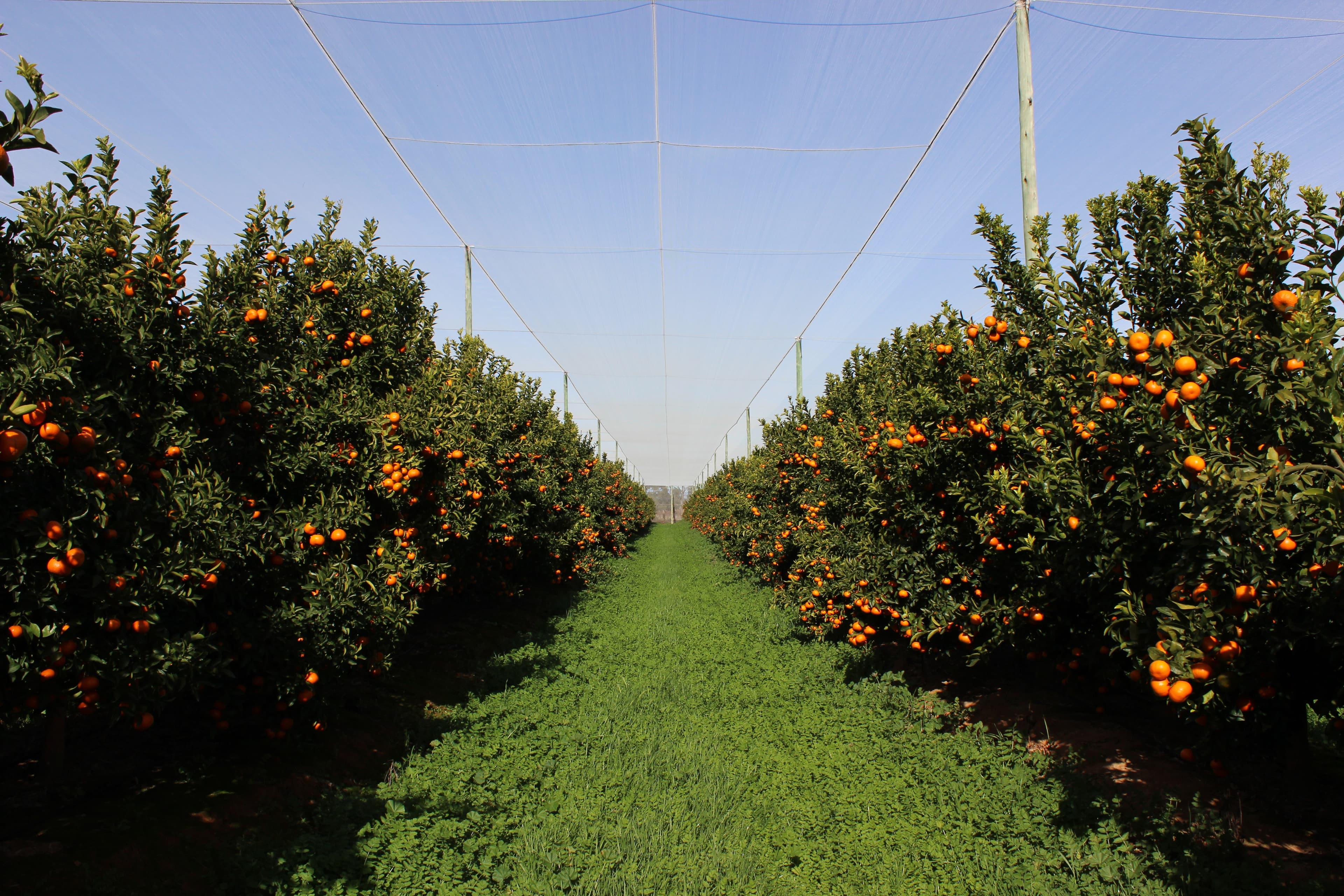
Achieve export pack-out rates of up to 95%
Knittex SpectraNet helps citrus producers stabilise orchard microclimates to deliver premium fruit to global markets – eliminating losses from sunburn and weather damage.
Secure Your Harvest
Connect with a technical representative for a site-specific assessment.
Or reach us directly on WhatsApp
0825210631The Standard of Export Excellence
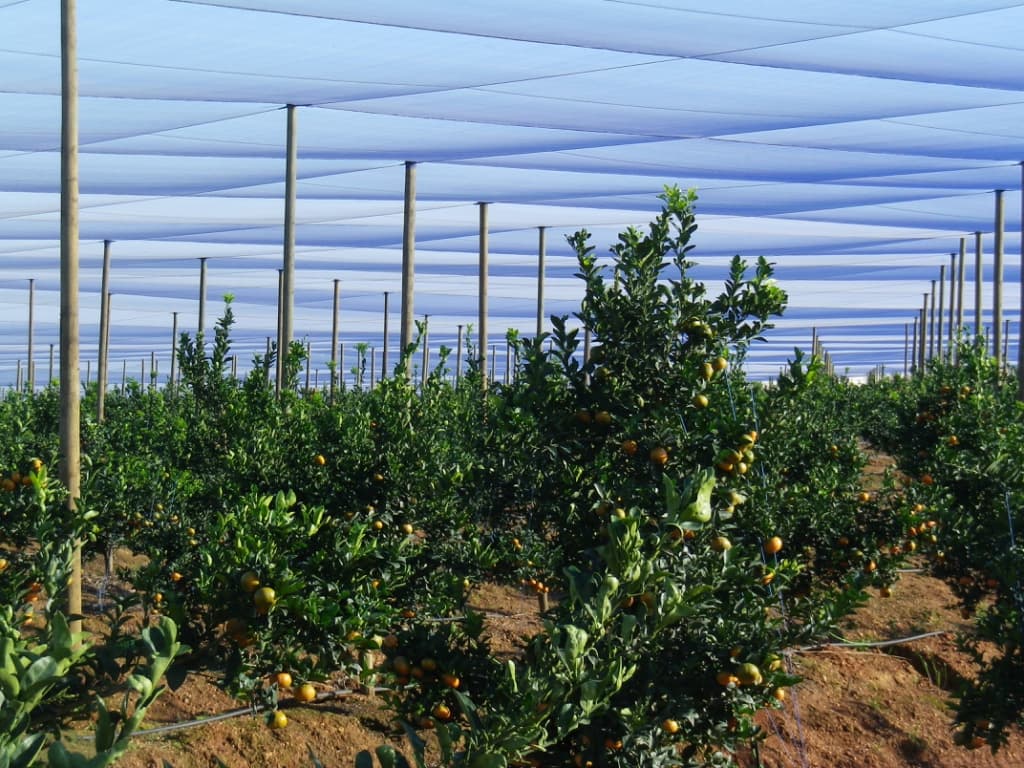
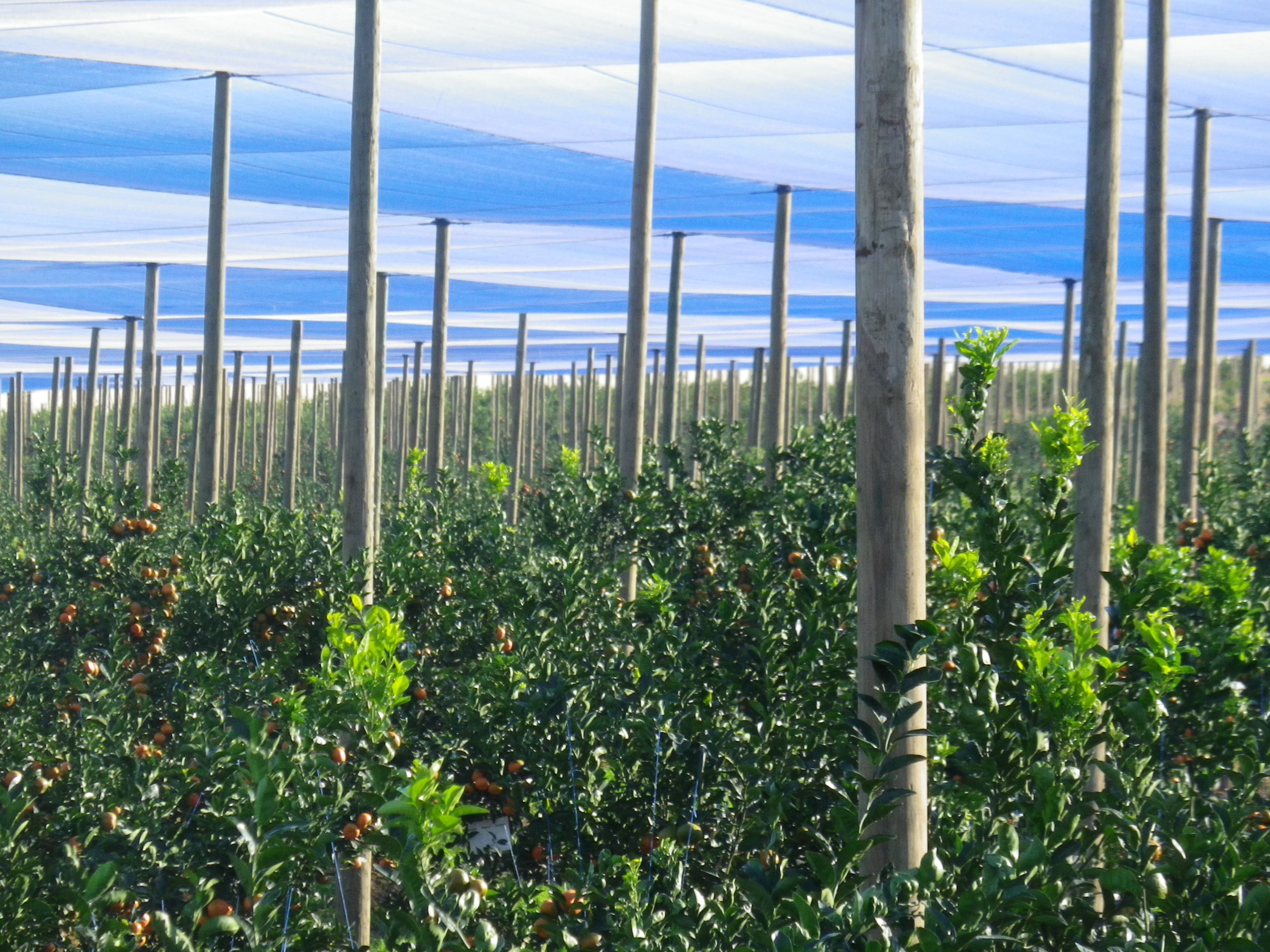
Consistent colour, size, and quality are achieved through controlled microclimates.
SpectraNet in Action
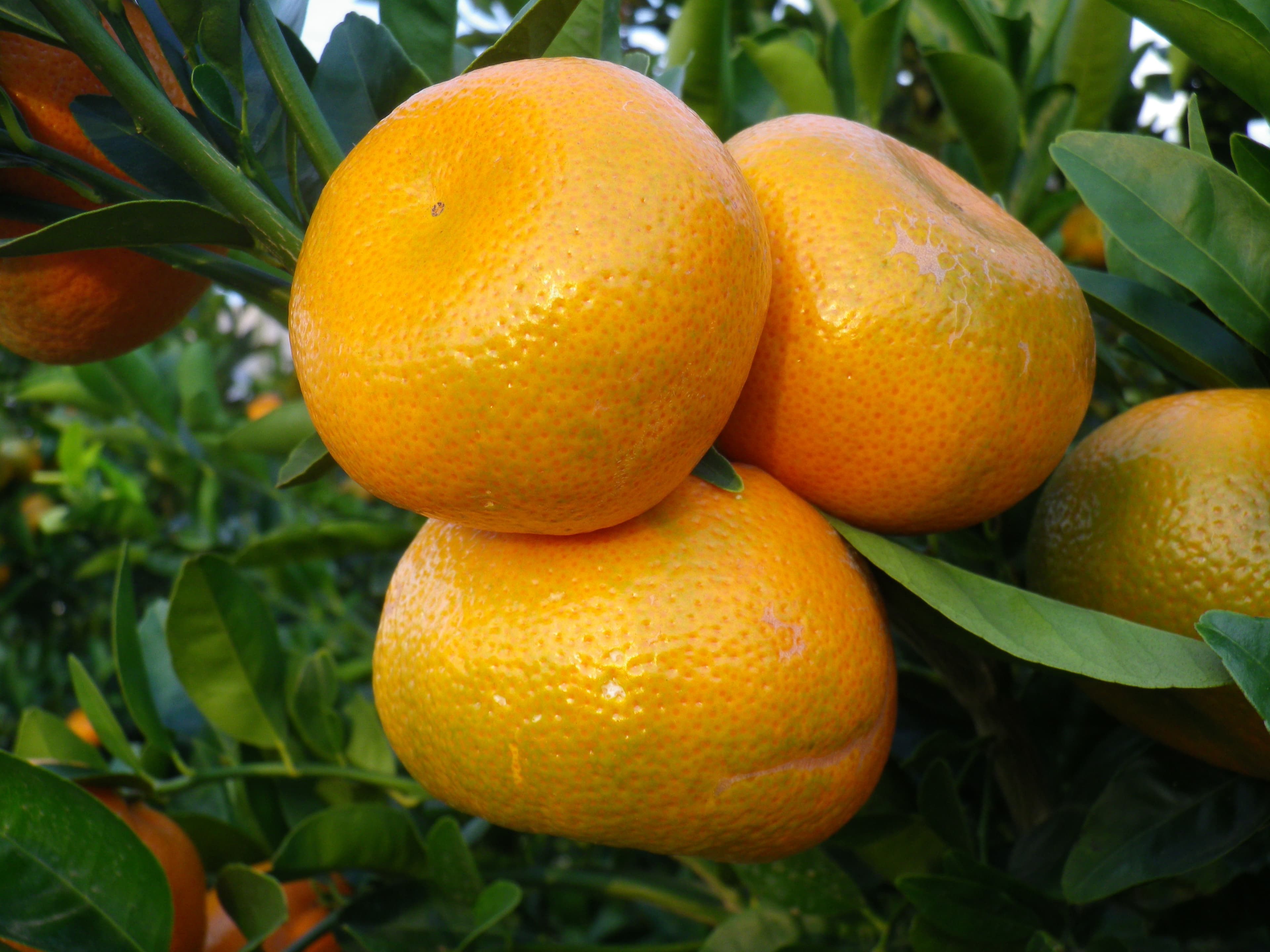
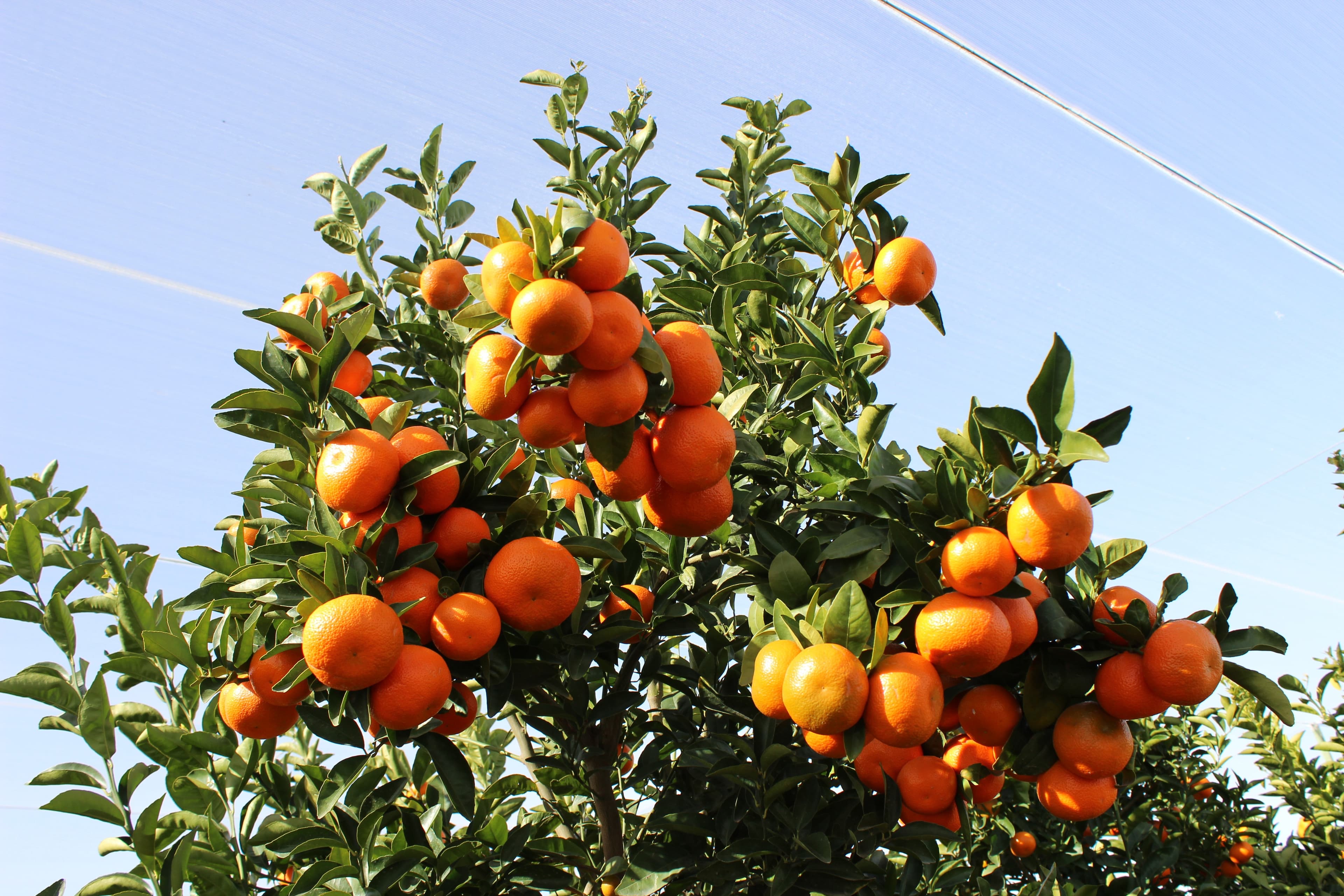
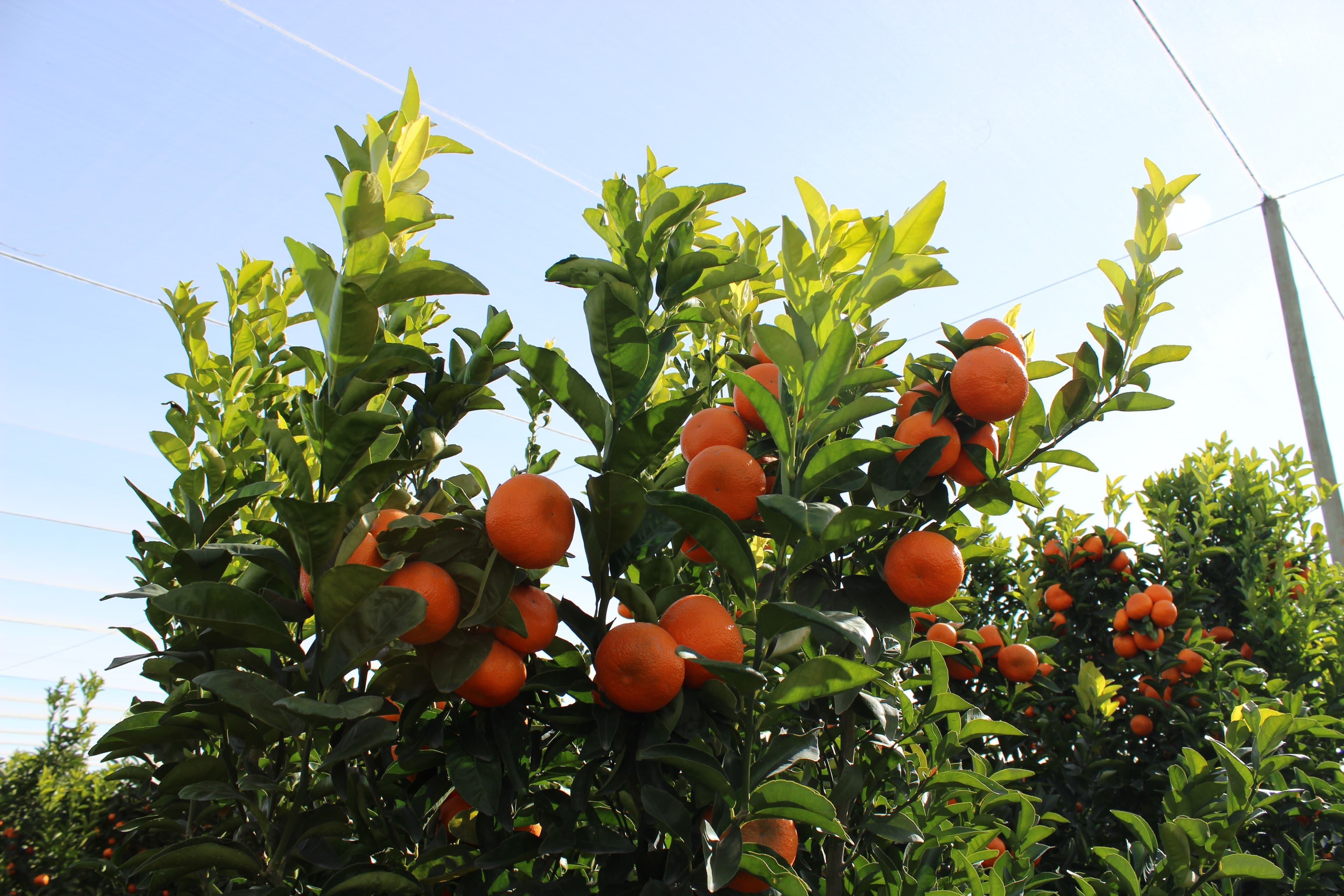
Watch how our high-performance knitted lock-stitch netting protects high-value crops and boosts export quality across Southern Africa.
Core Benefits of SpectraNet
Climate-Smart Orchard Protection
Protects crops against heat, sunburn, hail, wind, and insects.
Higher Export Pack-out
Stabilises microclimates for premium-grade fruit.
Water-Saving Performance
Reduces evapotranspiration and lowers the heat load in the orchard.
Built for Longevity
Weather-hardened netting designed for the harsh Southern African climate.
Engineered Protection
Our high-density polyethylene (HDPE) lock-stitch netting is designed for durability and precision. SpectraNet doesn’t just reduce sunlight intensity, it manages the entire light environment to prevent the plant stress that leads to crop rejection.
UV-stable
Maximum Longevity
Non-run
Lock-Stitch Design
Technical Pillars of Excellence
Built for the high-intensity light of Southern Africa.
Light Manipulation
Controlled light waves for optimal growth.
Thermal Stability
Reduced heat stress in the orchard.
UV Resistance
Engineered for maximum longevity.
Non-Run Technology
Advanced lock-stitch construction.
SpectraNet Light Wave Guide
Achieve export pack-out rates of up to 95%
Red shade nets allow a higher proportion of red wavelengths to pass through.
Red light is one of the most important wavelengths for Photosynthesis, so plants can often maintain strong growth even under partial shade.
Red nets → stimulate vegetative growth and fruiting
Blue nets → produce compact, sturdy plants
White nets → maximize light diffusion and uniformity
Black nets → mainly reduce light intensity
“Shade nets optimize light distribution for the plant canopy.”
Diffused light structures can sometimes increase crop yield even when total light is slightly reduced, because more leaves participate in Photosynthesis.
Red shade net
Red shade nets allow a higher proportion of red wavelengths to pass through. Red light is one of the most important wavelengths for Photosynthesis, so plants can often maintain strong growth even under partial shade.
Enhanced Photosynthesis • Stimulates Vegetative Growth • Improved Flowering and Fruit Development
Blue shade net
Blue shade net affects plants by altering both light intensity and light spectrum, which influences plant structure, leaf development, and overall growth patterns.
Compact, Stronger Plant Growth • Improved Leaf Development
White shade net
White shade net behaves differently from darker nets because it reflects and diffuses light rather than simply blocking it. This creates a very favourable environment for many crops.
Excellent Light Diffusion • Improved Crop Uniformity
Clear shade net
A clear shade net (no colour pigments) behaves differently from coloured nets because it does not significantly alter the light spectrum. Instead, it mainly controls light intensity and microclimate.
Light Reduction Without Spectral Change
Combination net
A black and clear combination shade net creates a balanced shading environment because it combines the properties of both black and clear filaments. The result is light reduction with a more natural spectrum and improved light distribution.
Balanced Light Reduction • Reduced Heat Stress
How SpectraNet Affects Plant Physiology
Control sunlight, reduce stress, and boost growth. With Knittex SpectraNet Premium, choose from 4% to 95% light transmission by adjusting net construction and colour—all tailored to your crop’s needs.
Protect seedlings, enhance flowering, and maximize yield under conditions engineered for success.
Photosynthesis
Photosynthesis is the process where plants use sunlight to produce food (sugars).
Process: Photosynthesis | Purpose: Produces energy (sugar) | What Light Does: Light is energy source
(More energy = heavier, sweeter fruit)
Photomorphogenesis
Photomorphogenesis is the process where light controls how a plant grows and develops.
Process: Photomorphogenesis | Purpose: Controls growth and shape | What Light Does: Light is information signal
(Better canopy shape = improved light penetration)
Transpiration & Respiration
Shade net influences both transpiration and respiration mainly by modifying the light intensity, temperature, humidity, and air movement around plants. These environmental changes directly affect how plants lose water and how fast they use energy.
Managing water loss and energy reserves.
Knittex SpectraNet Premium - Setting the World Standard in Shade Innovation.
Transmittance Spectrum
Code 20 - Comparison
Code 20 White
Percentage of light transmitted through the white net.
Code 20 Black/Clear
Percentage of light transmitted through the black/clear net.
Code 20 White Shade Factor
Percentage of light blocked by the white net.
Code 20 Black/Clear Shade Factor
Percentage of light blocked by the black/clear net.